
Jun 21, 2017
In November 2015, George Osborne disclosed plans to restrain the buy-to-let (BTL) market, implying its growing attractiveness was leaving aspiring first time buyers contesting with landlords for the restricted number of properties on the market.
One of things he brought in was that tax relief on BTL mortgages would be capped, starting in April 2017. Before April 2017, a private landlord could claim tax relief from their interest on their BTL mortgage at the rate they paid income tax – (i.e. 20% basic, 40% higher rate and 45% additional rate).
So, for example, let’s say we have a Rotherham landlord, a high rate tax payer who has a BTL investment where the rent is £900 a month and the mortgage is £600 per month. In the tax year just gone (16/17), assuming no other costs or allowable items:
- Annual rental income £10,800.
- Taxable rental income would be £3,600 after tax relief from mortgage relief
- The result: they would pay £1,440 in income tax on the rental income
And assuming there are no other changes, the landlord would have income tax liabilities (as things stand in May 2017) in the tax years of:
- (2017/18) £1,800
- (2018/19) £2,160
- (2019/20) £2,520
- (2020/21) £2,880
Landlords who are higher rate tax payers are going to have be a lot smarter with their BTL investments and ensure they are maximising their rental properties full rental capability. However, there is another option for landlords.
Landlords in Rotherham could set up a Limited Company and sell their
property personally to that Limited Company
In fact, looking at the numbers from Companies House, many landlords are doing this. In the UK, there are 93,262 BTL limited companies. Since the announcement in November 2015, the numbers have seen a massive rise:
- Q2 2015 / Q3 2015 – 4,193 Buy to Let Limited Companies Set Up
- Q4 2015 / Q1 2016 – 5,403 Buy to Let Limited Companies Set Up
- Q2 2016 / Q3 2016 – 3,007 Buy to Let Limited Companies Set Up
- Q4 2016 / Q1 2017 – 7,149 Buy to Let Limited Companies Set Up

So, by selling their BTL investments to their own limited company, owned 100% by them, these landlords could then offset the costs of running their BTLs as an ‘allowable expense’ – effectively writing off the cost of 100% of their mortgage outgoings, wear and tear and upkeep, letting agent’s fees etc.
I am seeing more and more Rotherham landlords approach me for my thoughts on setting up a BTL limited company.
In fact, I have done some extensive research with Companies House in the 15 months (1st January 2016 to 31st March 2017 and 185 BTL limited companies have been set up in the S postcode alone).
Should you make the change to a limited company?
If you are looking to hold your BTL investments for a long time it could be very favourable to take the short-term pain of putting your BTLs in a limited company for a long-term gain. You see, there are huge tax advantages to swapping property ownership into a limited company but there are some big costs that go with the privilege.
As the law sees the new limited company as a separate entity to yourself, you are legally selling your BTL property to your limited company, just like you would be selling it on the open market. Your limited company would have to pay Stamp Duty on the purchase and if you (as an individual) made a profit from the original purchase price, there could be a capital gains tax liability of 18% to 28%. The mortgage might need to be redeemed and renegotiated (with appropriate exit charges).
On a more positive note, what I have seen though by incorporating (setting up the limited company) is landlords can roll up all their little BTL mortgages into one big loan, often meaning they obtain a lower interest rate and the ability to advance new purchase capital. Finally, if the tax liability is too high to swap to a limited company, some savvy BTL investors are leaving their existing portfolios in their personal name whilst purchasing any new investment through a limited company. I am just throwing this idea out there (not giving advice!)
It’s vital that landlords get the very best guidance and information from tax consultants with the right qualifications, experience and insurance. Whatever you do, always get the opinions from these tax consultants in writing and never hurry into making any hasty decisions.
The modifications to BTL tax relief are being progressively eased in over the next three years so there is no need to be unnerved and rush into any decisions before finding out the specifics as they relate precisely to your personal situation, because with decent tax planning (from a tax consultant) and good rental / BTL portfolio management (which I can help you with).
Whatever you decide to do, let’s keep you the right side of the line!
Jun 8, 2017
“How far do Rotherham people go to move to a new house?” This was an intriguing question asked by one of my clients the other week.
Readers of this blog will know I love a challenge, especially when it comes to talking about the property market!
Not very far…
For the majority, the response is not very far.
It is much more common for homeowners and tenants in Great Britain to move across town than to the next town or county.
Until now, it’s been hard to say how many homeowners and tenants moved from (and to) relatively far away to buy or rent their new home. However, I carried out some research and requested some statistics from the Royal Mail. What came back was fascinating!
Using statistics for the 12 months up to the middle of Autumn 2016, 261 households moved out of Rotherham (S60), moving an average distance of 28.08 miles. This is the equivalent of moving from Rotherham to Leeds (as the crow flies). The greatest distance travelled was 294 miles – that’s more than 11 marathons (when someone moved to Penzance).
Considering there were 515 property sales in S60 in the year and countless tenant moves, the numbers seems consistent – once you find a town you like, you tend to want to settle down. If you do move, other factors are usually in play – you might only move to a different neighbourhood for better transport links or to be closer to the school you want to get your children into. The likelihood is you won’t travel far.
What about people moving into Rotherham?
I then turned my attention to people moving into Rotherham. Using the same statistics for the 12 months up to the autumn 2016, 291 households moved into Rotherham (S60). These households moved an average distance of 23.56 miles – the equivalent of moving from Gainsborough to Rotherham (again as the crow flies). The greatest distance travelled was 238 miles – that’s more than 9 marathons (when someone made the great decision of moving from Woolwell, Devon to Rotherham).
I have looked at the data of every person moving into Rotherham and these have been plotted on a map of the UK. Looking at the map below, it shows exactly where most people come from, when moving into Rotherham. As you can see, there are a high proportion of people moving from London and the South East.

So… what does all this mean for the landlords and homeowners of Rotherham?
When an agent markets a property for rent or let, it is vital to know the tenant or property buyer well. It’s important that the properties they are letting/selling fit the tenants/buyers, so that they almost sell themselves. These days this means not only knowing how many rooms and features a property offers but also being switched on to the budget that buyers and tenants are likely to want to spend on a property in that area. Knowing where someone comes from can be very useful.
Location, Location, Location…?
We’ve all heard the mantra “location, location, location”. However, I say it might be helpful to factor in where (and how) far people are moving from, so the property can be sold or let more easily.
Whilst I enjoy writing this blog, it’s also valuable research so that I can help my clients buy, let and sell well. The research in this article will actually enable my team at Bricknells Rentals to be more efficient in where to direct our marketing resources to ensure we maximise our clients’ properties rent-ability. I’ll also be able to advise prospective buy-to-let landlords a lot more effectively.
It’s a win-win situation. My research is valuable to me – and judging by the response to these blogs, it’s been valuable to people across Rotherham and further afield.
If you’re not already following me on Facebook or Twitter please do. I’m also happy to take any questions that you may have – you may end up having a blog written about it!
Jun 1, 2017
There are 23.36 million properties in England and Wales – 64% are owner occupied and 36% are rented either from a private landlord, local authority or housing association.
Over nine out of ten of those English and Welsh owner-occupied properties are either a whole house or bungalow. Now, most people would assume these properties would be freehold. However, of those renting nearly half of rental properties (44% to be precise) lived in other leasehold apartments and flats.
The difference between freehold and leasehold
It might be wise to quickly explain the difference between freehold and leasehold.
When someone owns the freehold of a property they own it outright, including the land it is built on, whilst with a leasehold property the leaseholder owns the property for the length of their lease agreement. Leaseholders must pay the person who owns land (the freeholder) ground rent and other fees.
When the leasehold ends, ownership returns to the freeholder although the leaseholder can extend the lease or they can buy the freeholder out, but there are rules and regulations with regards doing that.
Therefore, it would be safe to assume that houses are freehold and flats are leasehold… wouldn’t it?
Not necessarily!
Most houses are freehold but some might be leasehold – usually through shared-ownership schemes – but more and more new homes builders are selling houses on a leasehold as well. The protection of the law afforded to leaseholders who own a flat is massive, but sadly lacking to leasehold houses sold privately.
More and more new homes builders are selling houses on a leasehold
Looking specifically at the figures for Rotherham, at the last count in S60 and S61 there were 33,795 properties.
Since 1995, 21,342 properties in S60 and S61 have changed hands and have been sold.
Looking further at those 21,342 transactions, using data from Land Registry and solicitors practice My-Home-Move, 20.32% have been leasehold.
This is higher than the national average of 15%.

A growing concern
However, I am concerned about a few new homes builders selling new houses (not flats – houses) as leasehold.
There has been a growing (yet small) trend for new-build houses to be sold as leasehold in recent years. While not all house builders use this model, those that do maintain it helps make developments financially viable.
The issue comes when builders sell the freehold separately to an investment company without informing the leaseholder – which they are legally allowed to do without telling the leaseholder. In England and Wales, the “right of first refusal” to buy the freehold is written in law to leaseholders of flats i.e. the freeholder must offer it to the leaseholders of all the flats of the building first). This is not the case for leaseholders of houses.
Make sure you check very carefully!
This is the point I am trying to get across!
If you are buying a new home and it’s a house (i.e. not a flat) – please check very carefully indeed whether its freehold or leasehold.
If it is a leasehold, whilst you do have rights, they are not as strong as for those people buying a leasehold flat. I appreciate I am only talking about a very small percentage of the property market, but potentially this could end up costing thousands of pounds to those affected.
If you’re buying a property and you need some expert advice you can always contact me. I am happy to share my wealth of experience with readers of this blog.
Additionally, you can follow me on Facebook or Twitter for the latest insights.
May 26, 2017
According to the Land Registry’s latest House Price Index for Rotherham and the surrounding locality, the value of apartments/flats is rising at a faster rate than terraced/town houses, semi-detached properties and even detached property.
Values of apartments in Rotherham have increased by 6.92% over the past year, which is proportionally 21% more than the Rotherham average rise of 5.74%. Flats and apartments haven’t outperformed all of the other types of properties by such a gulf since summer 2003.
Compare the performance of flats with the other property types performed:
- Detached homes rose by 6.44%
- Semi-detached homes rose by 5.65%
- Terraced/Town-Houses rose by 4.91%
As you can see, there is a moderate increase in the rate of property value growth across the board. However, no one should confuse it with a strong and vigorous healthy property market.
Instead, it is somewhat an indicator of the long-lasting lack of property on the market. In fact, I have spoken about the lack of homes for sale in Rotherham on a number of occasions and whilst it isn’t as bad as it was 12 months ago – choice is still quite limited for buyers.
The average property value in Rotherham now stands at £141,400.
When split down into property types:
- Rotherham Apartments: £104,600
- Rotherham Detached: £237,400
- Rotherham Semi-Detached: £126,800
- Rotherham Terraced/Town-House: £90,300

So why have Rotherham apartments performed so well, and is it just a Rotherham thing?
When I scrutinised the figures for the rest of the UK, it appears that apartments are pacemakers in the clear majority of the country. Of the 379 local authority areas in the UK, the value of apartments is rising faster than detached, semi-detached and terraced houses in 320 of them.
So, should Rotherham apartment owners be getting out the Champagne?
Well, I would keep it on ice as the Land Registry figures are notorious for short term fluctuations. It’s hard to have faith in the fact that Rotherham house values rose rapidly last month given that, in the last six months, the Land Registry has frequently made downward revisions to their first published House Price Index figures.
Thankfully, the bigger picture from the Council of Mortgage Lenders (CML) stated that home buying activity last month was up 2% over the same month in 2016 – not bad as we have each quarter since Brexit. The CML stated first time buyer’s levels of affordability was being squeezed and that the average amount borrowed by those first time buyers dropped slightly last month, but the overall amount borrowed (by all buyers) was an impressive 12% – higher than the same month in 2016.
So, what next for Rotherham’s property market?
I believe the uplift in the values of apartments is a short-term blip. The real issue is with the way wage growth might not keep up with inflation. The impact of the change in exchange rate since Brexit will mean real wage growth stagnates. This will mean buyer demand growth will be curtailed and with property values already so full, I believe a renewed hastening in house price growth is unlikely.
I believe we are starting to return to the housing market we saw in the mid 1990s: steady demand, steady supply – nothing silly when it comes to house price growth.
I believe, with what is happening around us, that this isn’t a bad thing at all.
As always, if you have any questions please get in touch.
Additionally, you can follow me on Facebook or Twitter for the latest insights.
May 22, 2017
The unexpected snap election is drawing closer. Many homeowners in Rotherham have contacted me asking what impact this vote will have on the local property market. The best way to tell the future is to look at the past.
In Rotherham, 12,963 homes are owned without a mortgage and 14,482 homes are owned by a mortgage. This is clearly an important issue to the people of Rotherham, as well as many other voters up and down the country.
What’s going to happen to the property market?
I have looked over the last five general elections and analysed in detail what happened to the property market on the lead up to and after each general election.
Some very interesting information has come to light.
Of the last five general elections (1997, 2001, 2005, 2010 and 2015), only the last two elections had results that were uncertain (2010’s election led to the coalition government and 2015’s vote resulted in an unexpected Tory majority).
Therefore, I decided to compare the number of houses sold and prices achieved in 1997, 2001 and 2005 (when Tony Blair’s New Labour seemed impossible to stop) with the uncertainty of 2010 and 2015.
How have General Elections impacted the number of houses sold in the last 20 years?
Below your can see the number of properties sold and the dates of the general elections:

It is clear, looking at the number of monthly transactions (the blue line), that there is a certain rhythm or seasonality to the housing market. This has never changed since 1995 (seasonality meaning the periodic fluctuations that occur regularly based on a season – i.e. you can see how the number of properties sold dips around Christmas, rises in spring and summer and drops again at the end of the year).
To remove that seasonality, I have introduced the red line.
The red line is a 12 month ‘moving average’ trend line which enables us to look at the ‘de-seasonalised’ housing transaction numbers, whilst the yellow arrows denote the times of the general elections. It is clear to see that after the 1997, 2001 and 2005 elections, there was significant uplift in number of households sold, whilst in 2010 and 2015, there was slight drop in house transactions (i.e. number of properties sold).
How have General Elections impacted the property price of houses in the last 20 years?
Next, I wanted to consider what happened to property prices. In the graph below, I have used that same 12-month average, housing transactions numbers (in red) and yellow arrows for the dates of the general elections but this time compared that to what happened to property values (pink line).

It is quite clear none of the general elections had any effect on the property values.
Also, the timescales between the calling of the election and the date itself also means that any property buyer’s indecisiveness and indecision before the election will have less of an impact on the market.
What about the rental market?
There are 5,416 private rented properties in Rotherham. What does this all mean for the landlords of these properties?
Well, as I have discussed in previous articles property value growth in Rotherham is expected to be more subdued in the coming few years for reasons other than the general election.
The growth of rents has taken a slight hit in the last few months as there has been a slight over supply of rental property in Rotherham, making it imperative that landlords in South Yorkshire are realistic with their market rents.
But, in the long term, as the younger generation still choose to rent rather than buy, the prospects are good. Investing in buy-to-let property still looks a good bet – even with the changes in taxation.
If you’d like any more advice about buying or selling a property around a General Election or if you have any further questions about the impact of the current political situation on the property market then please contact me. You can always catch me on Facebook or Twitter if you want the latest information!
May 7, 2017
More and more babies are being born to mothers in Rotherham! I believe this increase will continue to add pressure to the already overstretched property market.
On the back of eight years of ever increasing birth rates, a significant 4.94 babies were born for every new home that was built in the Rotherham council area in 2016.
I believe this has and will continue to exacerbate the Rotherham housing shortage, meaning demand for housing (both to buy and to rent), has remained high. The high birth rate has meant Rotherham rents and Rotherham property prices have remained resilient – even with the challenges the economy has felt over the last eight years, and they will continue to remain high in the years to come.
High birth rate levels
The ratio of births to new homes has reached one its highest levels since 1945 (back in the early 1970s the average was only one and a half births for every household built).
 Looking at the local birth rates, the latest figures show we in the Rotherham council area had an average of 64.6 births per 1,000 women aged 15 to 44. Interestingly, the national average is 61.7 births per 1,000 women aged 15 to 44 and for the Yorkshire & Humber region its 61.9 births per 1,000 women aged 15 to 44. Rotherham is well above the national average. (Source: Office of National Statistics)
Looking more closely, the number of births from Rotherham women between the ages of 20 to 29 are significantly higher than the national average, but those between 35 and 44 were much lower.
However, the overall birth rate is still increasing, and when that fact is combined with the ever-increasing life expectancy in the Rotherham area, the high levels of net migration into the area over the last 14 years and the growth in single person households, this can only mean one thing…
 There’s a huge need for more housing in Rotherham.
An interesting trend is that more and more people are choosing to have children whilst they are tenants because they feel safe in rented accommodation. Renting is becoming a viable and practical choice for Rotherham people.
The planners and politicians in our local authority, central government and people as a whole need to recognise that with individuals living longer, people having more children and relatively high level of divorce rates, demand for property is simply outstripping supply.
The simple fact is more Rotherham properties need to be built
Rotherham needs more properties available to buy and more properties available to rent.
Only 1.1% of the country is built on by houses. Now I am not suggesting we build tower blocks in the middle of the Peak District, but the obsession of not building on any greenbelt land should be carefully re-considered.
Yes, we need to build on brownfield sites first, but there aren’t hundreds of acres of brownfield sites in Rotherham. In what brownfield sites there are, building on them can only work with complementary public investment. Many such sites are contaminated and aren’t financially viable to develop, so unless the Government put their hand in their pocket, they will never be built on.
This shouldn’t be a crude attack on our green spaces – we need a new approach to enable some parts of the countryside to be regarded more positively by local authorities, politicians and communities and allow considered and empathetic development. Society in the UK needs to consider the greenbelts outside their leisure and visual appeal, and assess how they can help to shape the way we live in the most even-handed way.
This is a difficult time and at the moment no one is proposing a sustainable way forward.
Follow me on Twitter or Facebook for the most up-to-date news on the property here in Rotherham. If you’re a buy-to-let landlord or looking to become a buy-to-let landlord, you may find my ‘featured properties‘ page a helpful place to start – there are some great tips there!



 Looking at the local birth rates, the latest figures show we in the Rotherham council area had an average of 64.6 births per 1,000 women aged 15 to 44. Interestingly, the national average is 61.7 births per 1,000 women aged 15 to 44 and for the Yorkshire & Humber region its 61.9 births per 1,000 women aged 15 to 44. Rotherham is well above the national average. (Source: Office of National Statistics)
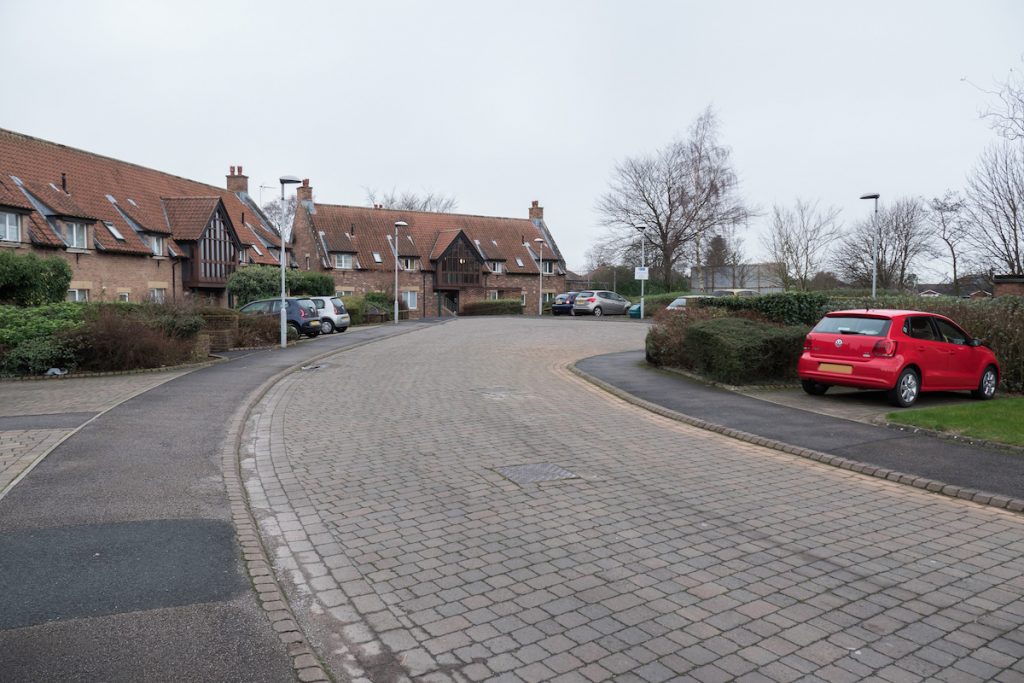 There’s a huge need for more housing in Rotherham.
